#88. When Smartwatches Become Health Infrastructure
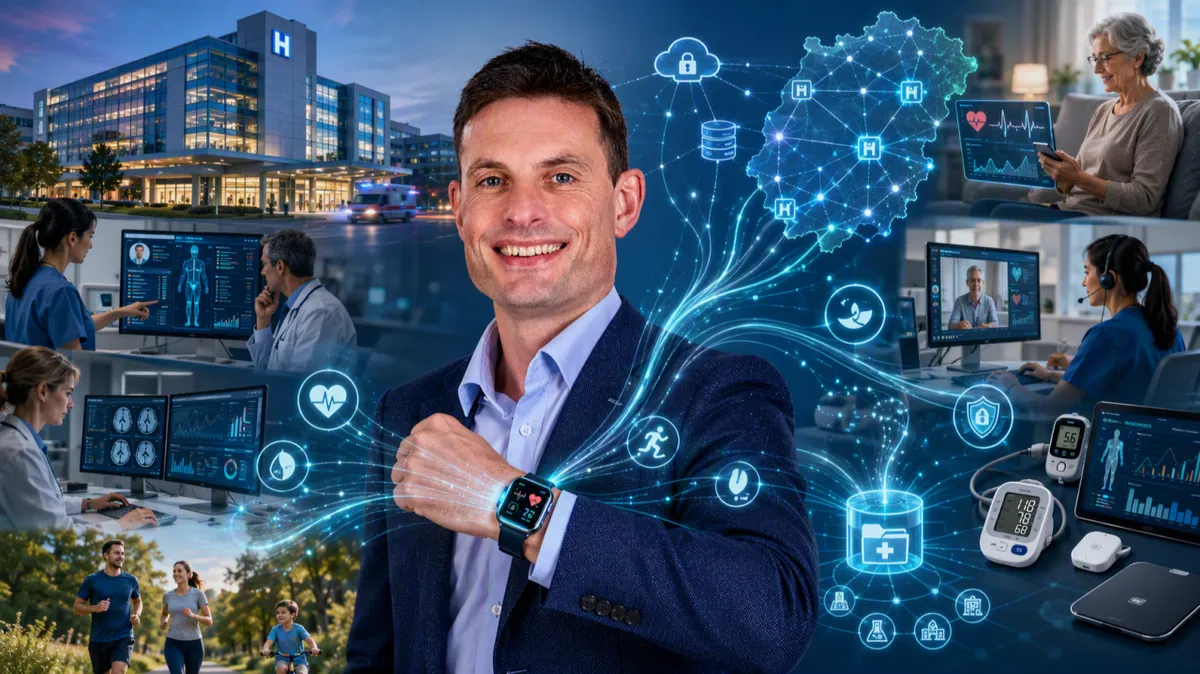
For years, wearable technology has sat slightly outside mainstream healthcare.
Millions of people (including me 😊 ) track their steps, heart rate, sleep patterns and activity levels every day, yet much of that information remains disconnected from the systems that clinicians use to deliver care. Smartwatches have become part of daily life, but not really part of healthcare infrastructure.
That may be starting to change.
What caught my attention this week was an announcement from Australia that new regulations are expected to allow healthcare identifiers to be linked to wearable and biometric devices, creating the foundations for data from smartwatches and home monitoring technologies to connect into the country’s digital health infrastructure.
In a recent newsletter, I wrote about remote patient monitoring and the growing evidence that care can be delivered safely and effectively outside traditional clinical settings. The important point was the idea that healthcare is gradually shifting from episodic and appointment-driven models towards something that is more continuous and data-driven.
Much of the information we capture today is episodic. A patient attends an outpatient clinic. A measurement is recorded. They return months later for another assessment. Yet the vast majority of life happens between those interactions.
Wearables have the potential to fill some of those gaps by providing a much richer picture of what is happening between appointments.
The interesting question is what health systems do with that information.
One theme emerging from the article was the ambition to move away from what was described as a “break and fix” model and towards prevention.
Health systems around the world face a similar challenge. Demand is growing faster than workforce capacity. Populations are ageing. Chronic conditions are increasing. Simply expanding traditional models of care is unlikely to be enough.
The promise of connected devices is not that they generate more data. Healthcare already has plenty of that. The promise is that they enable earlier intervention.
Instead of waiting until someone becomes unwell enough to require treatment, continuous monitoring creates opportunities to identify deterioration sooner, support preventative interventions and focus clinical attention on those who need it most.
The bigger challenge is integrating it into care pathways, clinical workflows and operating models that were designed for a different era. The greatest barriers are rarely technical. They are organisational, clinical and cultural.
So while the headline is about smartwatches, I think the story is about health systems beginning to build the foundations for a world where healthcare becomes increasingly continuous rather than episodic, preventative rather than reactive, and personalised rather than standardised.
The smartwatch is simply one visible part of that much larger transformation.
Originally published on LinkedIn.